
Bookkeeping for UK businesses in 2026.
A cloud platform, a bank feed, receipt capture, and regular reconciliation. Making Tax Digital means every UK business now needs all four working together.
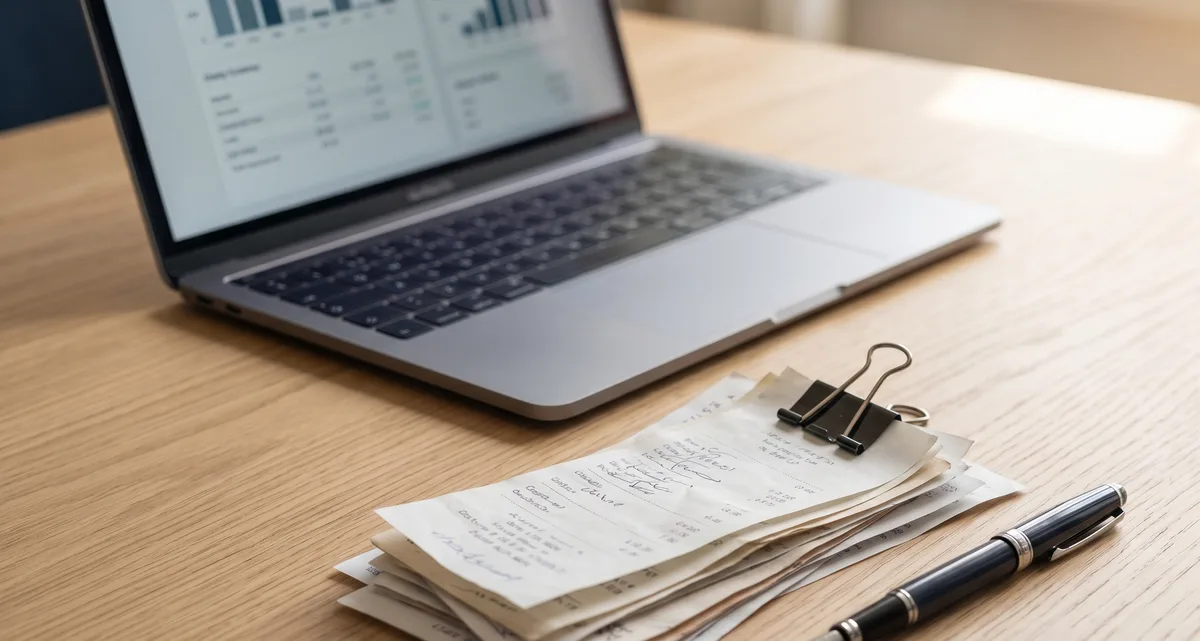
The modern setup
Cloud platform, linked bank feed, receipt capture and regular reconciliation. Remove any component and the records get weaker.
Jump to section 02Why MTD changed it
Digital links between systems are now the compliance test. Typing numbers from a bank statement into a spreadsheet fails the rule.
Jump to section 03What good books make easier
Up-to-date tax forecasting, dividend checks, 13-week cashflow, funding packs and expense claims with receipts attached.
Jump to section 04Where teams go wrong
Mixed personal & business accounts, quarterly-only reconciling, optional receipts, price-first software choices, over-relying on the year-end accountant.
Jump to sectionWhat modern bookkeeping involves
Bookkeeping in 2026 is four components working together: a cloud accounting platform (Xero, FreeAgent, QuickBooks, or Sage), a linked business bank account with bank feeds, a receipt-capture tool (Dext, Hubdoc, AutoEntry), and regular reconciliation. Remove any component and the records get weaker: reconciliation without receipts leaves expense claims unsupported; receipts without a bank feed multiplies manual work.
Why MTD changed the bookkeeping job
MTD for VAT has been live since 2019 for most VAT-registered businesses. MTD for ITSA applies from April 2026 where 2024/25 combined gross self-employment and property income exceeded £50,000. The 2025/26 return is tested against £30,000 for April 2027 and 2026/27 against £20,000 for April 2028. Paper records and year-end reconstruction are being pushed out by digital filing rules.
"Digital links", data paths between systems with no manual re-entry, are the compliance test. A bookkeeping process that requires typing numbers from a bank statement into a spreadsheet fails the rule. Fixing the process at the deadline usually costs more than setting it up correctly from the start.
What good bookkeeping makes easier
- Accurate tax forecasting: a current view of taxable profit replaces the January surprise.
- Dividend-legality confidence: distributable reserves can be checked before declaring interim dividends.
- Cashflow planning: 13-week rolling forecasts require weekly-accurate ledgers.
- Fundraising readiness: clean historical books are a non-negotiable for any serious investor or bank.
- Expense claims with evidence: digital receipts with OCR metadata survive HMRC enquiry scrutiny.
Where most UK businesses go wrong
- Mixing personal and business transactions in a single account, illegal for limited companies, disastrous for sole traders at MTD time.
- Reconciling too rarely, errors compound and reconstruction takes far longer.
- Treating receipts as optional, without digital capture, expense claims cannot survive HMRC enquiry.
- Choosing software on price alone, the cheapest option rarely has the integrations your bank and tax agent require.
- Leaving bookkeeping entirely to the accountant, that is not cheaper, because the accountant has to do remedial work before any meaningful year-end planning can happen.
Related bookkeeping guides
Chart of Accounts Guide for Small Companies
Set up a chart of accounts that keeps sales, costs, director loans, VAT and payroll clear enough for tax returns and management accounts.
GuideXero Setup Checklist for UK Limited Companies
A practical Xero setup checklist for UK companies, covering bank feeds, VAT, chart of accounts, payroll links and director loan records.
Related tools and services
Get your bookkeeping working as the source of every number.
We rebuild your chart of accounts, fix the bank-feed and reconciliation gaps, and set up the cloud records that support VAT and year-end.
Rebuild your bookkeeping setup